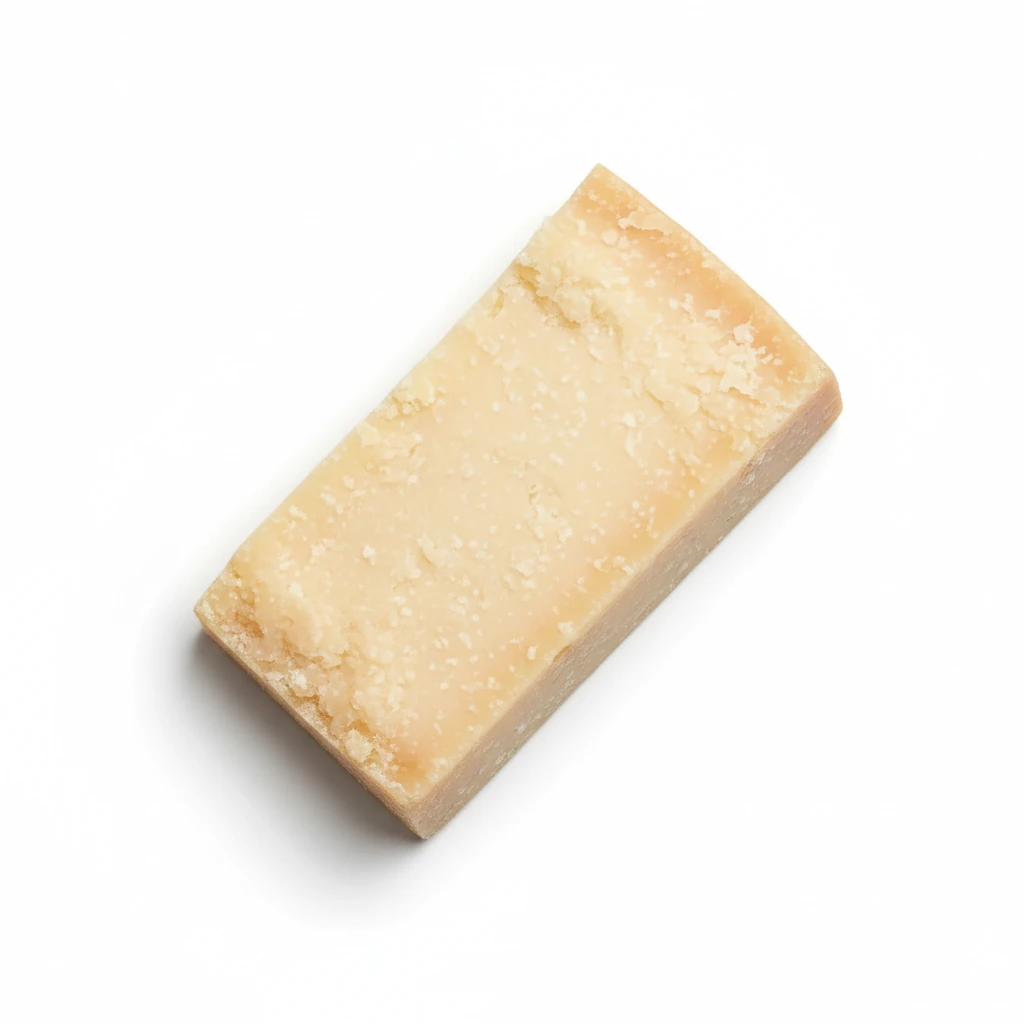
Cheese for Babies: How to Serve Them Safely
Yes. Pasteurized cheese can be introduced as a cow’s milk food, often from 6–8 months. Serve thin strips or a smear of soft cheese. Avoid cubes, string-cheese chunks, and unpasteurized cheese.
Can babies eat cheese?
Yes, if it is pasteurized. Ricotta, cottage cheese, and mild cheddar strips are practical. Cheese is salty, so keep portions small.
When can babies have cheese?
After you are introducing cow’s milk protein, often alongside yogurt. Cow’s milk as a drink still waits until 12 months.
Cheese provides protein, fat, and calcium. It is energy-dense and easy to add to vegetables or toast.
How to serve cheese
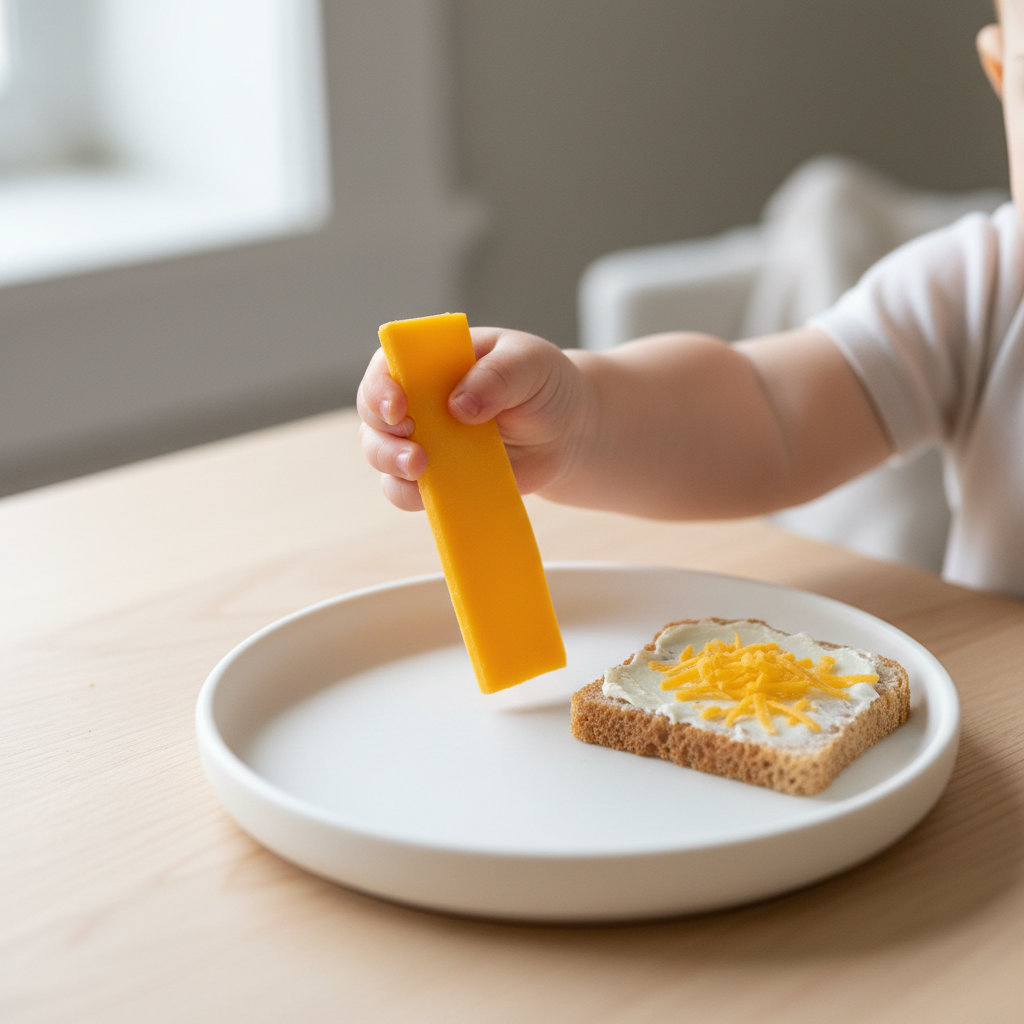
How to serve cheese at 6 months
Spread pasteurized ricotta or cream cheese thinly on toast, or offer a long, flat strip of mild cheddar. No cubes.
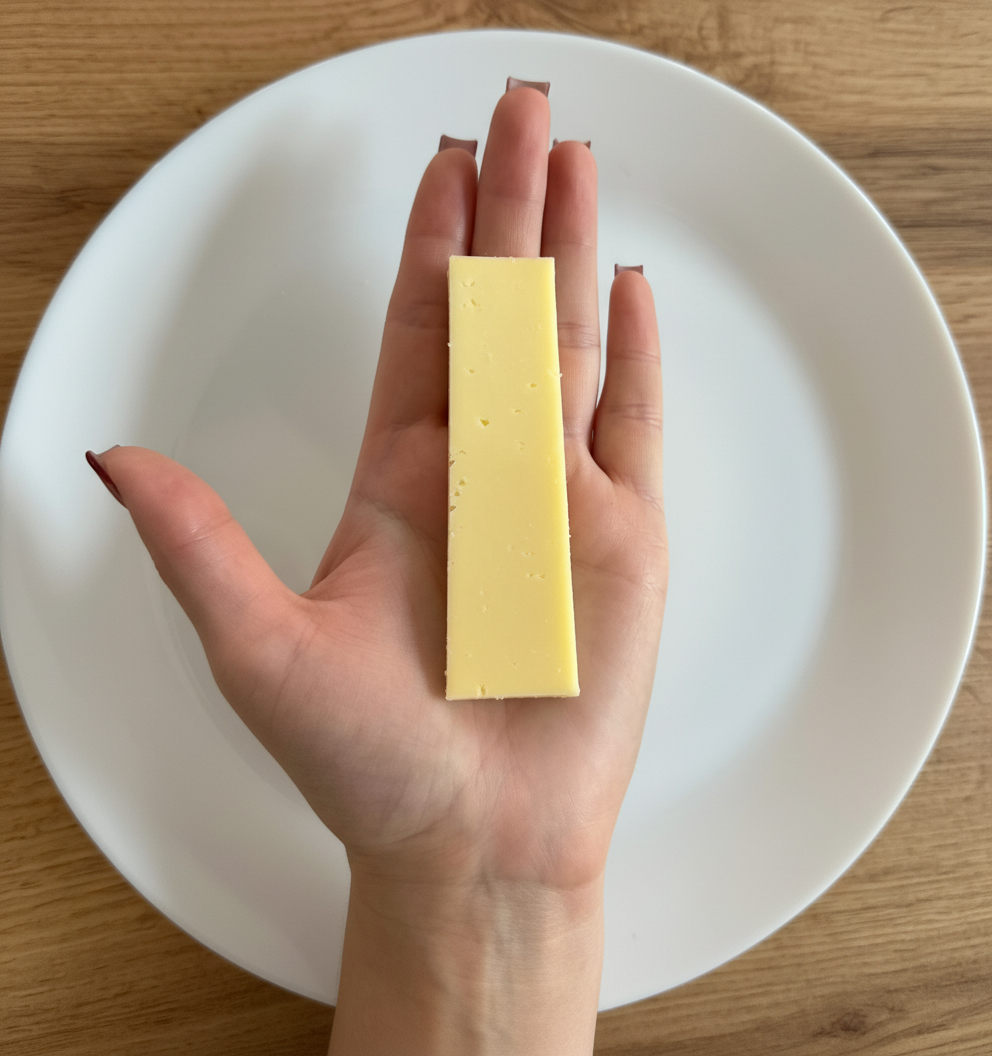
How to serve cheese at 9 months
Bite-sized pieces cut from a flat slice, or shredded cheese sprinkled sparingly. Still avoid cubes.
How to serve cheese at 12+ months
Thin slices and shredded cheese remain safer than cubes. Cheese can be part of family meals in small amounts.
Are cheese a choking hazard?
Cheese cubes and large melted globs are choking hazards. Cut flat and thin. Avoid mozzarella pearls and string cheese logs.
Are cheese an allergen?
Cheese contains cow’s milk protein, a major allergen. Do not serve unpasteurized or mold-ripened cheeses such as brie.
How much cheese can a baby eat?
A thin strip or a teaspoon of soft cheese is a reasonable start. Cheese is salty — it is a taste, not a main drink-milk replacement.
Do cheese need to be cooked?
No for pasteurized table cheese. Melting is optional.
Can babies eat frozen cheese?
Not needed. Keep cheese refrigerated.
How to prepare cheese
- Choose pasteurized cheese.
- Cut long flat strips or spread thinly.
- Skip cubes and unpasteurized varieties.
Storage
- Refrigerate and follow the package date.
- Wrap hard cheese tightly so it does not dry out.
Easy cheese recipes
Frequently asked questions
Which cheese is lowest in salt?
Fresh cheeses such as ricotta and mozzarella are usually lower in salt than aged cheddar. Still serve small amounts.
Sources
- Addendum guidelines for the prevention of peanut allergy in the United States — NIAID
- Food Allergies in Babies and Children — American Academy of Allergy, Asthma & Immunology
- Starting Solid Foods — American Academy of Pediatrics
- When, What, and How to Introduce Solid Foods — CDC
- Complementary feeding — World Health Organization
- Your baby’s first solid foods — NHS
Reviewed by Morvarid Nikousokhantayar, Canadian Child Nutrition & BLW Expert.