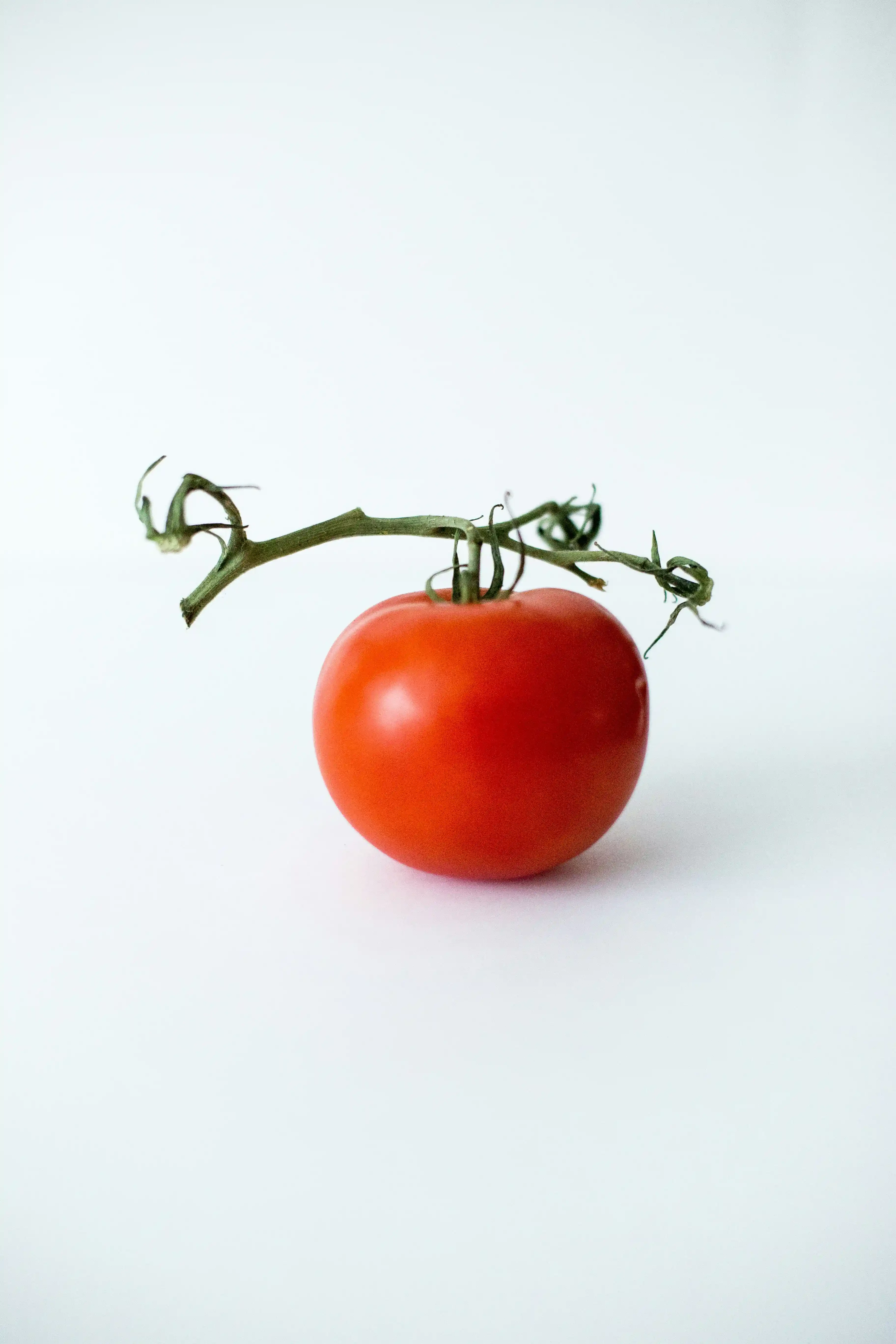
Tomato for Babies: How to Serve Them Safely
Yes. Ripe tomato can be offered from about 6–8 months. Acid can redden the skin around the mouth. Cherry tomatoes must be quartered — never served whole.
Can babies eat tomatoes?
Yes. Large ripe wedges or cooked tomato are easier than firm cherry tomatoes. Blanching to loosen skin is optional if skins bother your baby.
When can babies have tomatoes?
Often from 6–8 months. Start with a small amount because of acidity.
Tomatoes provide vitamin C and lycopene. They help iron absorption when served with meat, beans, or lentils.
How to serve tomato
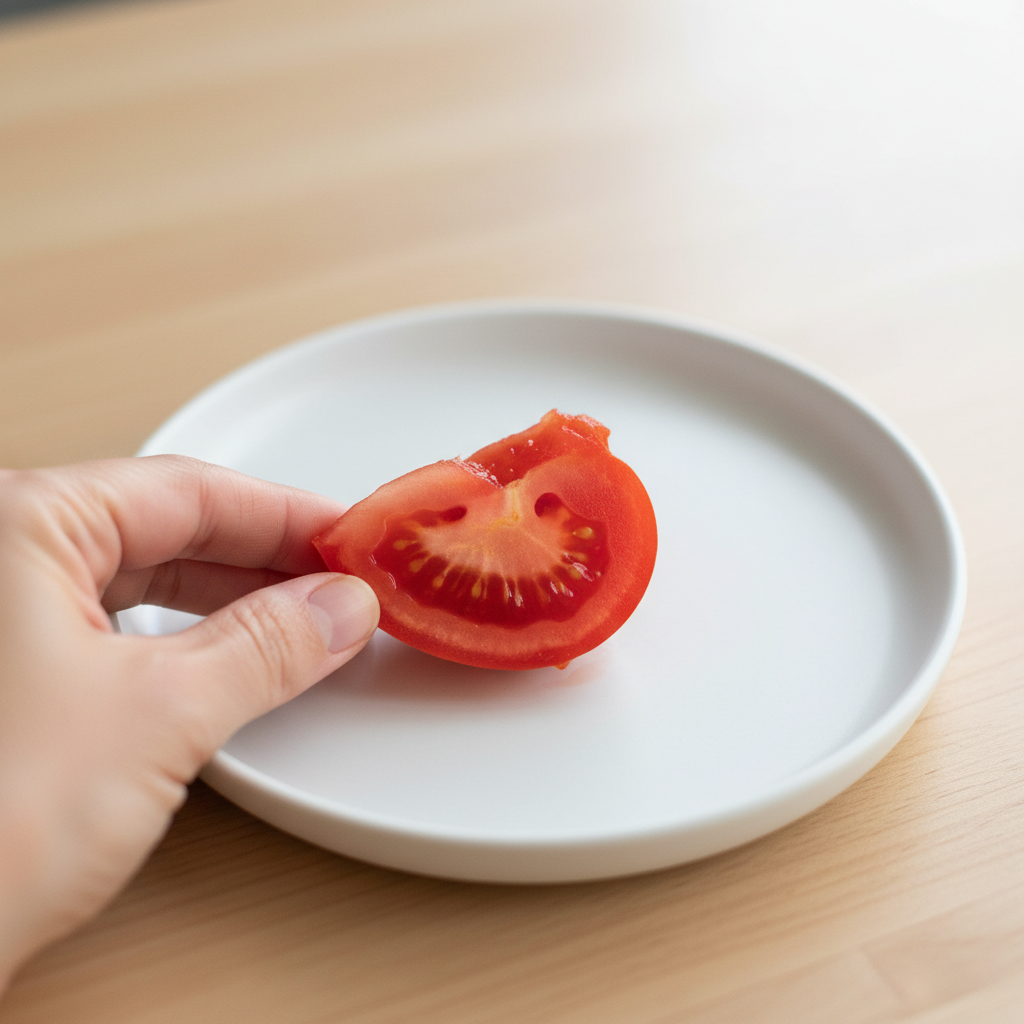
How to serve tomato at 6 months
Offer a large ripe wedge or a whole very ripe tomato bigger than the mouth. Cooked tomato is gentler for sensitive bottoms.
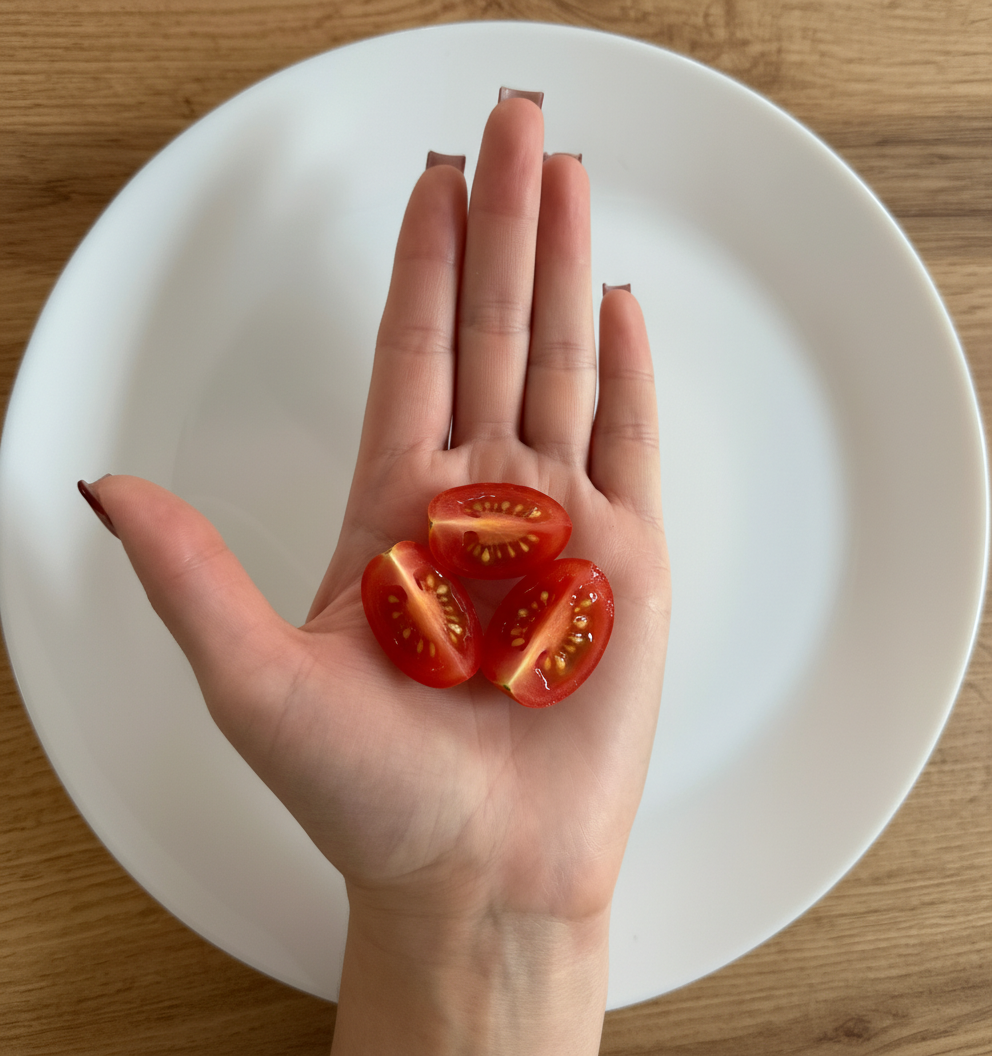
How to serve tomato at 9 months
Quarter cherry tomatoes. Large wedges and thin slices also work.
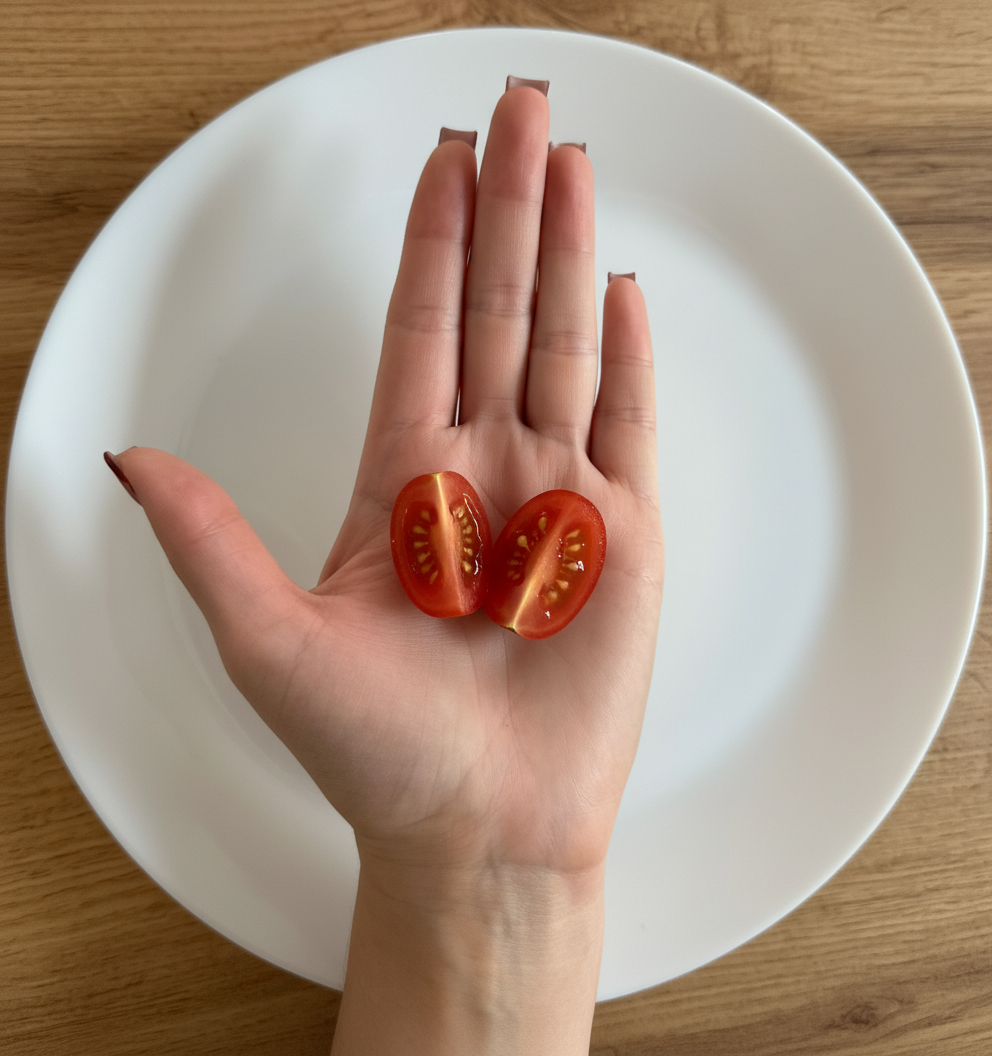
How to serve tomato at 12+ months
Keep quartering cherry tomatoes until chewing is consistently thorough. Whole cherry tomatoes stay risky.
Are tomatos a choking hazard?
Whole cherry tomatoes are a classic choking hazard. Quarter them lengthwise. Firm underripe tomatoes are also harder to mash.
Are tomatos an allergen?
Tomato is not a major allergen. Face redness is often acid irritation. True allergy is less common.
How much tomato can a baby eat?
A wedge or a few quartered pieces is enough. Acidic foods can cause a diaper rash if portions are large.
Do tomatos need to be cooked?
No, but cooked tomato is milder. Cooking is a comfort choice, not a requirement.
Can babies eat frozen tomatos?
Cooked tomato sauces freeze well. Thaw and serve warm, low in salt.
How to prepare tomato
- Use ripe tomatoes.
- Quarter cherry tomatoes.
- Optional: blanch and peel if skins gag your baby.
Storage
- Keep whole tomatoes at room temperature.
- Refrigerate cut tomato and use within 2 days.
Easy tomato recipes
Frequently asked questions
Can tomato sauce be used?
Plain, low-salt cooked tomato is fine. Avoid spicy sauces and added sugar.
Sources
- Starting Solid Foods — American Academy of Pediatrics
- When, What, and How to Introduce Solid Foods — CDC
- Complementary feeding — World Health Organization
- Your baby’s first solid foods — NHS
Reviewed by Morvarid Nikousokhantayar, Canadian Child Nutrition & BLW Expert.