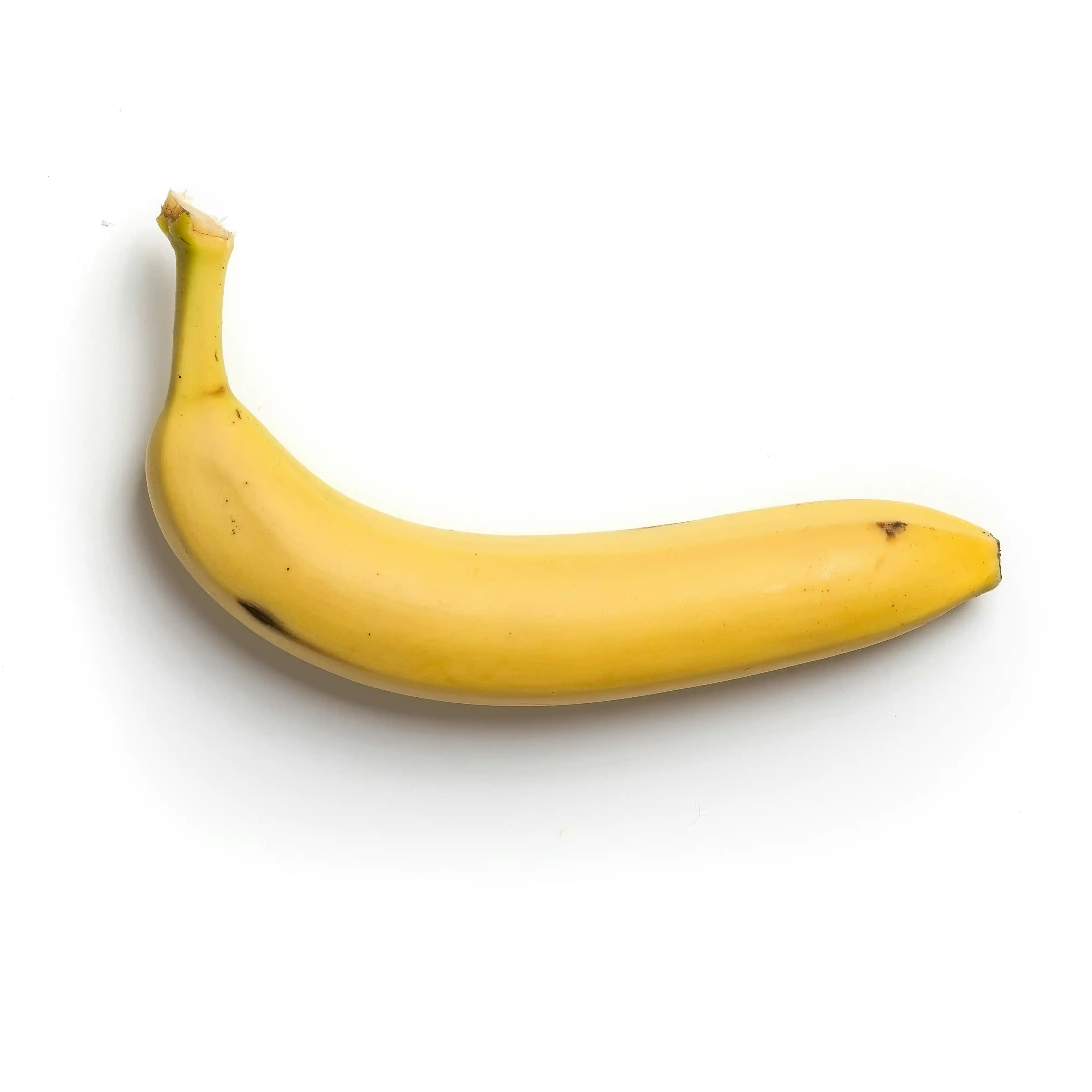
Banana for Babies: How to Serve Them Safely
Yes. Ripe banana can generally be introduced when a baby is developmentally ready for solid foods, usually around 6 months. For baby-led weaning, serve a very ripe banana in a large, graspable piece or as a mashed spoonful. It should mash easily between your fingers.
Can babies eat bananas?
Yes. Bananas are a common first food because they are naturally soft, easy to digest, and low-allergen. Choose a ripe banana with brown spots so the fruit is mashable with gums.
When can babies have bananas?
Most babies can have banana around 6 months if they can sit with support, bring food to their mouth, and show interest in eating. Banana does not need to wait until teeth appear.
Banana is naturally sweet and provides potassium, vitamin B6, fiber, and quick energy. It can help firm stools, which is why it is often used when a baby has loose poop.
How to serve banana
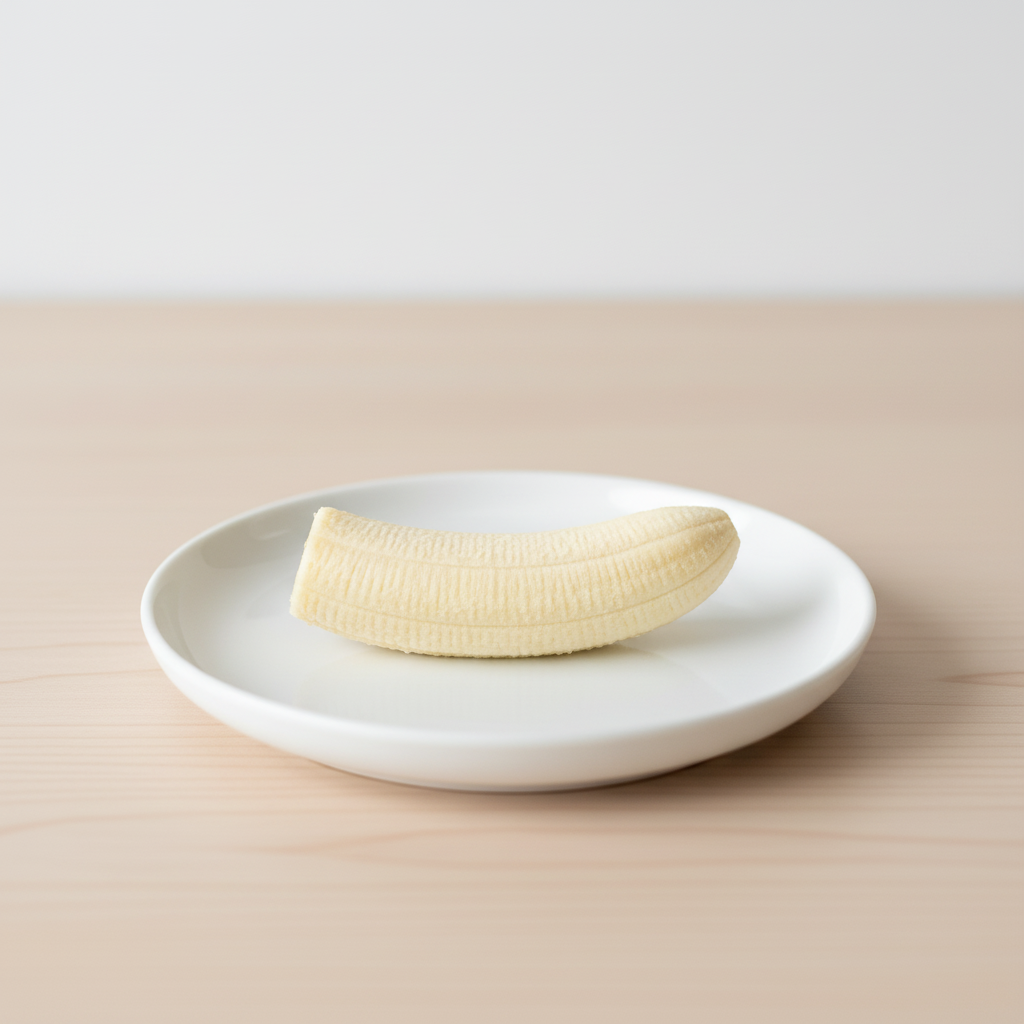
How to serve banana at 6 months
Offer a whole ripe banana with a small peel “handle,” or split it lengthwise into thick spears. It should be so soft it mashes with gentle pressure. If banana sticks to the roof of the mouth and causes gagging, try spears instead of a mashed pile.
How to serve banana at 9 months
Once the pincer grasp is developing, offer small ripe pieces about the size of a chickpea, or keep offering spears for biting practice. Serve one or two pieces at a time.
How to serve banana at 12+ months
Toddlers can eat banana rounds, spears, or mashed banana on toast. Continue to avoid large sticky wads that can pack in the mouth.
Are bananas a choking hazard?
Ripe banana is soft, but sticky mashed banana can pack in the mouth and trigger gagging. Serve pieces that mash easily, avoid large unripe chunks, and stay within arm’s reach while your baby eats.
Are bananas an allergen?
Banana is not one of the major food allergens. True banana allergy is uncommon. As with any new food, offer a small amount first and watch for unusual symptoms.
How much banana can a baby eat?
There is no required portion. At 6 months, a few bites of banana at a meal is enough. Milk feeds still do most of the nutrition work. Increase based on your baby’s hunger and the rest of the plate.
Do bananas need to be cooked?
No. Ripe banana is served fresh. Do not cook it unless you are mixing it into a baked food such as pancakes.
Can babies eat frozen bananas?
Yes, after thawing. Frozen banana should be fully thawed until soft. Do not offer hard frozen banana pieces, which are a choking risk.
How to prepare banana
- Choose a ripe banana that mashes easily between your fingers.
- Peel, or leave a 1–2 cm peel handle at the bottom for grip.
- Serve whole, as thick spears, or pre-load mashed banana on a spoon.
Storage
- Keep unripe bananas at room temperature.
- Ripe bananas can go in the fridge for 2–3 days; the peel may darken.
- Serve cut banana right away, or within 2 hours.
Easy banana recipes
Frequently asked questions
Can a 6-month-old eat banana every day?
Yes, if the rest of the diet includes iron-rich foods. Banana is useful, but it should not crowd out meat, beans, or fortified grains.
Does banana cause constipation?
Ripe banana is less likely to constipate than a very green banana. If stools are hard, pair banana with pear, kiwi, or other higher-fiber fruits and offer water in an open cup with meals.
Can babies eat banana with peanut butter?
Yes, after peanut has been introduced safely. Spread a thin layer of smooth peanut butter on banana spears. Never offer a thick glob of nut butter.
Sources
- Starting Solid Foods — American Academy of Pediatrics
- When, What, and How to Introduce Solid Foods — CDC
- Complementary feeding — World Health Organization
- Your baby’s first solid foods — NHS
Reviewed by Morvarid Nikousokhantayar, Canadian Child Nutrition & BLW Expert.